
In the competitive global kitchenware market, cookware brands face a pivotal decision when launching new 304 stainless steel products: choosing between OEM (Original Equipment Manufacturing) and ODM (Original Design Manufacturing). This choice directly impacts product uniqueness, development costs, time-to-market, and long-term brand competitiveness—especially for brands partnering with specialized manufacturers like those featured on jincui.com, a leading Cookware Factory and Customized Cookware Producer focused on 304 stainless steel 厨具 excellence. Understanding the nuances of OEM and ODM, paired with leveraging a factory’s strengths (such as strict material testing, modern production lines, and tailored solutions), is key for cookware brands aiming to stand out.
1. OEM vs ODM: Core Definitions for Cookware Brands
Before weighing the pros and cons, cookware brands must first clarify the fundamental differences between OEM and ODM—both of which align with the service models offered by top manufacturers, but shift responsibility for design and production in distinct ways.
1.1 What Is OEM for Cookware Brands?
OEM, or Original Equipment Manufacturing, means cookware brands provide a complete 304 stainless steel product design (including material grades, dimensional specs, handle ergonomics, and surface finishes like mirror-polish or brushed options) to a Cookware Factory. The factory—such a professional manufacturer—executes production strictly to the brand’s design, leveraging its in-house capabilities: from 304 stainless steel sheet cutting (via CNC machines) to precision forging (for tri-ply bases) and quality inspections (as per ISO 9001 standards). For example, if a cookware brand wants a 304 stainless steel casserole with a bakelite handle (a popular combo in professional lines), it shares blueprints with the factory, which handles raw material sourcing (certified 304 steel) and assembly. In this model, cookware brands retain full design control—consistent with the OEM promise of “your design, our craftsmanship.”
1.2 What Is ODM for Cookware Brands?
ODM, or Original Design Manufacturing, flips the design responsibility: the Cookware Factory develops ready-to-use 304 stainless steel product designs based on market trends (e.g., space-saving detachable handles, stand-up glass lids—both featured in professional ODM catalogs) and industry standards. Cookware brands then select a design and request minor customizations—such as adding logos (via laser engraving, a standard service of professional producers), adjusting pot capacities (from 2L to 6.5L, a common size range for 304 stainless steel cookware), or modifying handle colors—without overhauling the core structure. For instance, professional ODM lines include a 304 stainless steel frypan with a heat-resistant handle; a cookware brand can tweak its diameter to fit European markets and launch it under its own name. ODM reduces R&D burdens, as the factory handles design validation (e.g., 10,000-cycle durability tests) and prototype sampling—accelerating brand timelines.
2. OEM vs ODM: Which Benefits Your Cookware Brand More?
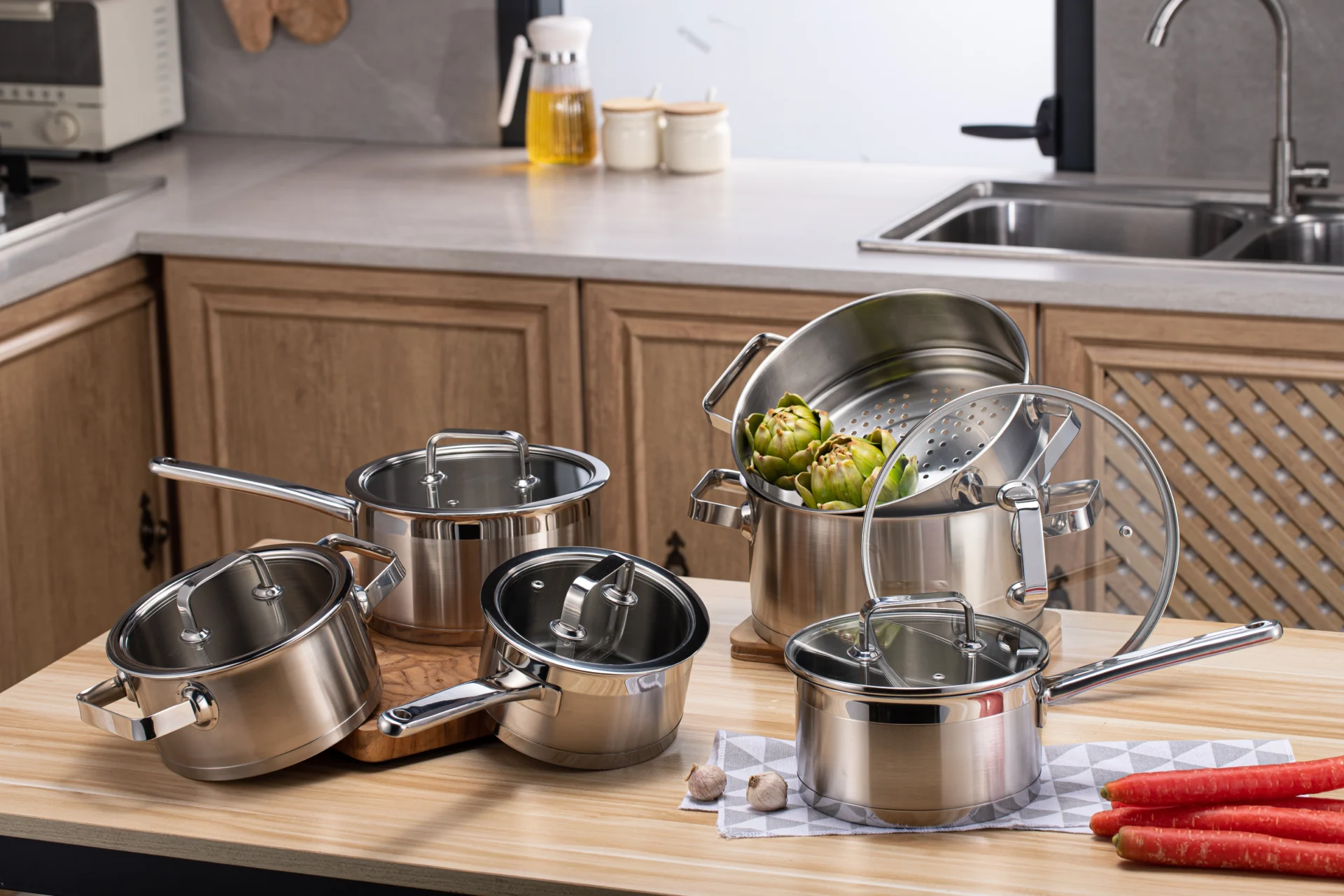
The choice between OEM and ODM depends on a cookware brand’s resources, market positioning, and alignment with a Cookware Factory’s strengths—like those of top manufacturers, which balance OEM customization and ODM efficiency.
2.1 Advantages of OEM for Cookware Brands
- Design Exclusivity: For cookware brands targeting high-end markets (e.g., luxury 304 stainless steel lines), OEM with a professional factory lets them craft unique designs (e.g., custom-shaped saucepans) that avoid “generic” products. Professional OEM services support small-batch trials (starting at 50 units, a standard offering for niche testing), ideal for validating niche concepts.
- IP Ownership: All design rights stay with the cookware brand—the factory’s OEM agreement explicitly prohibits sharing designs with third parties, protecting brand competitiveness.
- Alignment with Brand Values: Brands focused on eco-friendly or premium features (e.g., 18/10 304 stainless steel, lead-free handles) can enforce strict standards via the factory’s material traceability system (each batch is tested and documented, a key quality control measure).
2.2 Advantages of ODM for Cookware Brands
- Faster Time-to-Market: Professional ODM catalogs have pre-tested designs, cutting development time to 3–6 months (vs. 12+ months for OEM). Brands can launch products quickly—critical for seasonal trends (e.g., holiday-themed cookware sets).
- Lower Costs: ODM eliminates design team expenses; professional ODM pricing includes tooling and sampling (a transparent offering for cost control), making it ideal for startups or brands expanding into new categories (e.g., adding 304 stainless steel stockpots to a frypan line).
- Market-Proven Reliability: Professional ODM designs are based on consumer feedback (e.g., anti-slip handles, easy-clean surfaces) and global certifications (SGS)—reducing the risk of launching unpopular products.
3. Key Tips for Cookware Brands: Partnering with a Reliable Cookware Factory
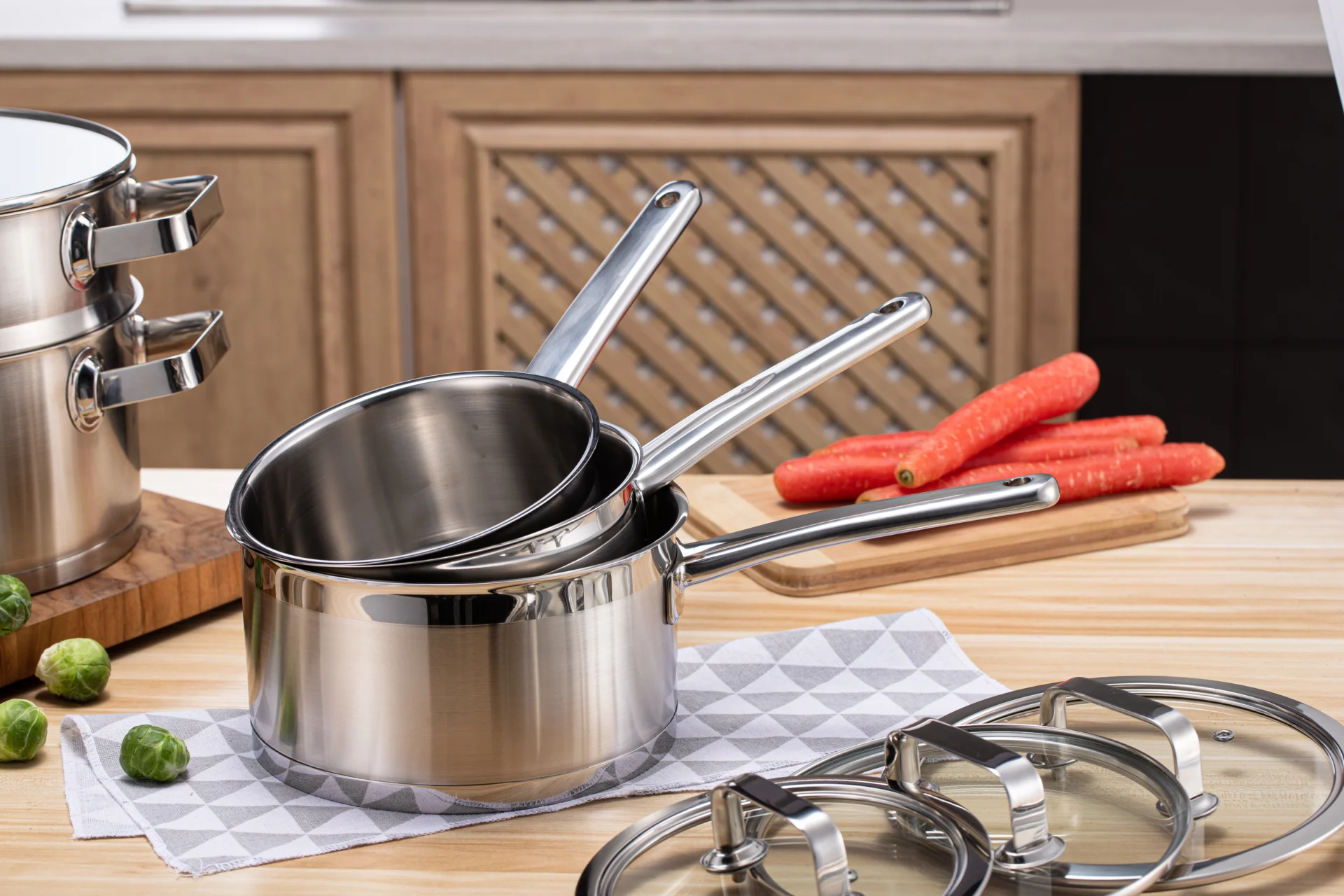
Choosing OEM or ODM is only half the battle—cookware brands must partner with a reliable Cookware Factory and Customized Cookware Producer to ensure 304 stainless steel quality and service consistency.
3.1 Evaluate the Factory’s Core Capabilities
Key strengths to look for in a factory:
- Material Expertise: Ensure the factory uses certified 304 stainless steel (reliable factories provide material test reports for every order).
- Production Scale: Look for modern equipment (top factories have 12+ CNC forging machines and 8+ assembly lines) to meet volume needs.
- Certifications: Prioritize factories with ISO 9001 (reliable factories display this certification prominently)—non-negotiable for global cookware brands.
3.2 Clarify Customization Needs
- For minor tweaks (logo, color): Professional ODM services handle this in 2–3 weeks—faster than most average factories.
- For full design control (unique structure): Top OEM teams assign a dedicated engineer to refine blueprints and provide 3D prototypes.
Always document requirements (reliable factories offer formal quotes with customization details) to avoid miscommunication.
3.3 Align with the Factory’s Market Focus
Top Cookware Factories specialize in 304 stainless steel cookware for European, American, and Southeast Asian markets—if your brand targets these regions, their ODM designs (e.g., induction-compatible bases for Europe) and OEM compliance (e.g., EU food safety standards) will save time. For niche markets, the factory’s customization team can adapt designs accordingly.
4. Conclusion: Leverage the Factory’s Strengths to Choose the Right Model
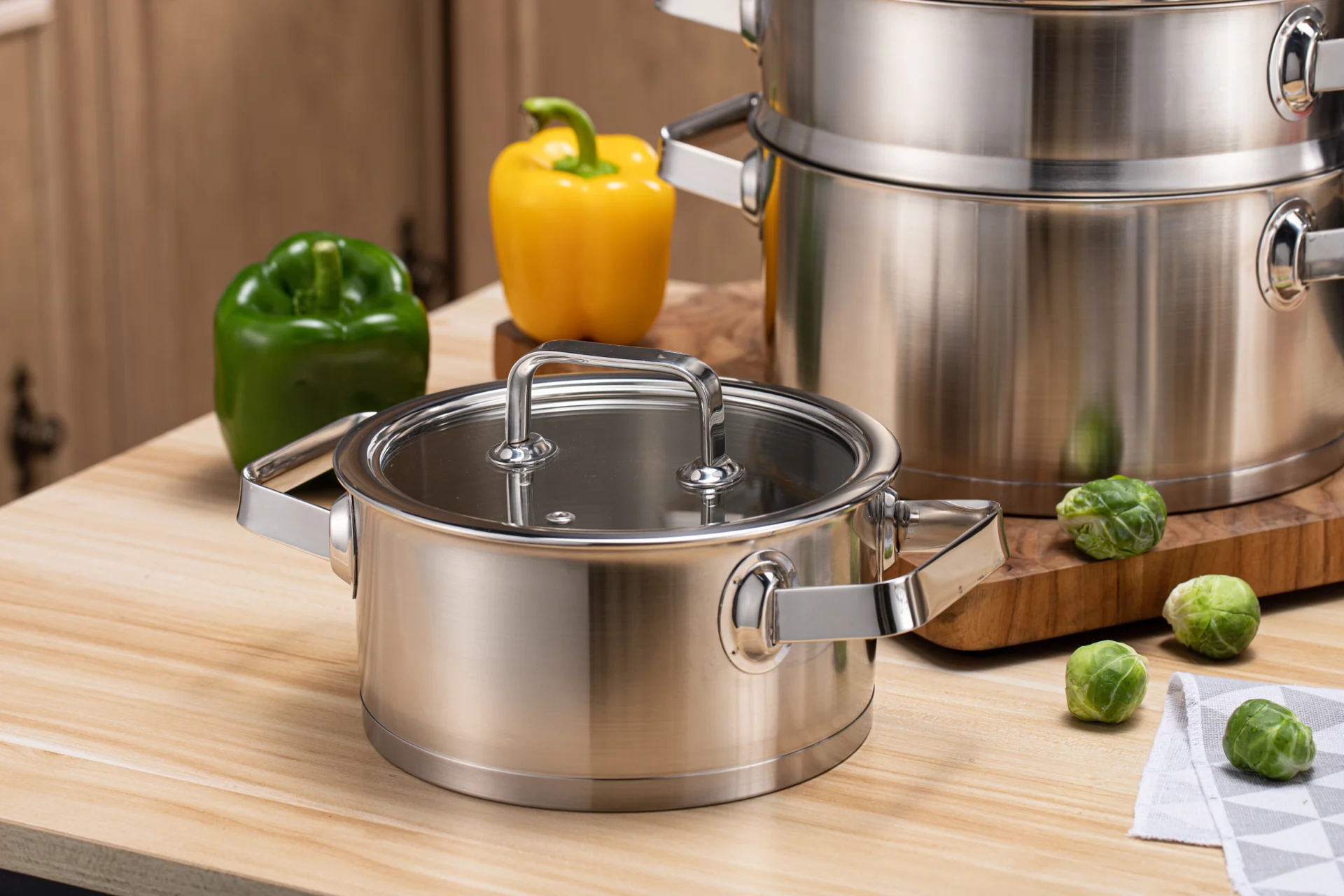
For cookware brands, OEM and ODM are not just production models—they are strategic tools to leverage a Cookware Factory’s expertise, like that of top manufacturers. OEM empowers brands to lead with unique 304 stainless steel designs (backed by the factory’s craftsmanship), while ODM accelerates launches (using the factory’s market-proven catalog). By aligning your brand’s goals (exclusivity vs. speed) with the factory’s strengths (customization vs. efficiency), you can turn 304 stainless steel cookware into competitive, customer-loved products—solidifying your position in the global market.