80% of first-time cookware importers report quality issues with their initial order — wrong steel grades, delaminating bases, handles that loosen after a month. If you’re searching for a stainless steel cookware manufacturer or supplier, the stakes are higher than finding the cheapest price on an Alibaba listing. You’re looking for a partner who understands that a single bad batch can cost you your retail contracts, your brand reputation, and six months of market momentum.
This guide gives you exactly what you need: a deep dive into steel grades, base construction technologies, factory verification methods, and market-specific requirements that most sourcing guides gloss over. By the end, you’ll have a practical scorecard to evaluate any manufacturer — and you’ll know the three questions that catch most suppliers off guard.
Key Takeaways
- The global stainless steel cookware market is valued at over $8.5 billion and growing at 4–6% annually — demand is not the question, supplier quality is
- 304 (18/8) stainless steel is the minimum standard for food-contact cookware; 201 steel is unsuitable and frequently misrepresented
- Base construction technology (Whole-Clad vs. Impact Bonding vs. Brazing) dramatically affects performance, price point, and target market fit
- Nesting/Matryoshka cookware sets are a consumer-friendly, cost-efficient product line — compact storage, lower freight costs, and strong urban market appeal; colorful painted exteriors give buyers more aesthetic choices while offering genuine protective and maintenance benefits
- A factory evaluation scorecard can eliminate 90% of sourcing risk before your first order
Why Stainless Steel Cookware Dominates the Global Market
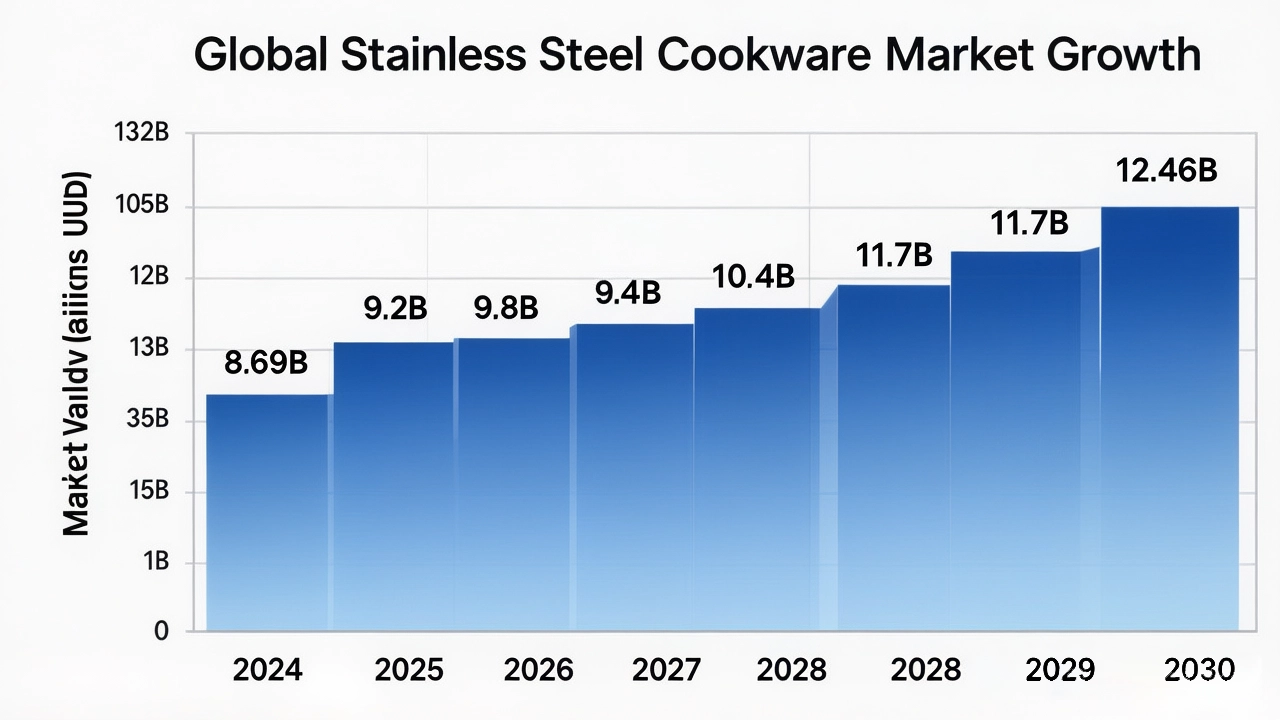
The global stainless steel cookware market was valued at approximately $8.69 billion in 2024 and is projected to reach $12.46 billion by 2030, growing at a CAGR of roughly 6% (Grand View Research). Stainless steel pots and pans alone account for over 41% of total cookware revenue.
Three things are pushing this growth — and they’re not slowing down:
- Health-conscious consumers are abandoning non-stick coatings. PFOA-free isn’t enough anymore — buyers want zero-coating cookware entirely
- Professional kitchen influence continues to trickle down. Home cooks want what chefs use: induction-compatible, oven-safe, dishwasher-friendly stainless steel
- Regulatory pressure in the EU and North America is tightening around PFAS restrictions (European Commission PFAS policy), making stainless steel the future-proof material choice
Over 80% of the world’s stainless steel cookware comes from factories in China — which is exactly why knowing how to evaluate a stainless steel cookware factory in China separates the buyers who succeed from those who don’t.
Stainless steel cookware market: $8.69B (2024) → $12.46B (2030)Stainless steel cookware market: $8.69B (2024) → $12.46B (2030)
JC Cookware: A Manufacturer Worth Knowing
When sourcing guides recommend a specific manufacturer, the credibility of that recommendation matters. So here’s the case for Jiangmen Xinhui Jincui Metalware Co., Ltd.— operating globally as JC Cookware.
The Company at a Glance
JC Cookware was established in 2003 in Jiangmen, Guangdong Province — a region that produces a disproportionate share of China’s exported stainless steel cookware. That’s not a coincidence; Jiangmen’s concentration of steel processors, handle fabricators, and logistics infrastructure makes it one of the few locations where a vertically integrated cookware manufacturer can actually operate at scale without relying on a fragmented supply chain.
The facility spans 40,000 square meters. Annual production runs above 3,000,000 pieces. Cumulative export volume has crossed 50,000,000 units, shipped to buyers in 30+ countries across North America, Europe, the Middle East, and Australia. These aren’t aspirational figures — they’re the kind of numbers that show up in freight records and retailer compliance audits.
What’s notable about JC Cookware’s client mix is its range: the same facility supplies global retail chains (where pricing discipline and on-time delivery are non-negotiable), premium DTC housewares brands (where quality consistency run-to-run matters more than unit cost), and fast-growing e-commerce labels that need short lead times and flexible order sizes. Serving all three simultaneously, over two decades, requires a level of operational discipline that most factories at this price point simply don’t maintain.
Why Five Base Technologies Matters
Most stainless steel cookware factories in China are optimized for one or two base construction methods — usually whatever requires the least capital investment. The practical consequence for buyers is that the factory’s recommendation tends to reflect what’s already on their floor, not what’s actually best for your market.
JC Cookware operates all five major base construction technologies in-house:
| Technology | What It Delivers | Market Fit |
| Tri-Ply (3-Ply) Whole-Clad | Aluminum core runs base to rim — eliminates sidewall hot spots | Premium retail, professional chef lines |
| 5-Ply Brazed Composite Base | Additional layers for enhanced heat retention and induction response | High-end induction-ready lines, European premium |
| Impact Bonding | Thick encapsulated base via friction bonding — 1,000+ thermal shock cycles | Commercial, mid-market, wholesale |
| Braze Welding | Copper-alloy bonded aluminum disc — cost-efficient and reliable | Value retail, entry-level segments |
| Colorful Painted Exterior | High-temperature cured (230°C+) coating, Pantone-matched | Brand-differentiated, Gulf and Asian markets |
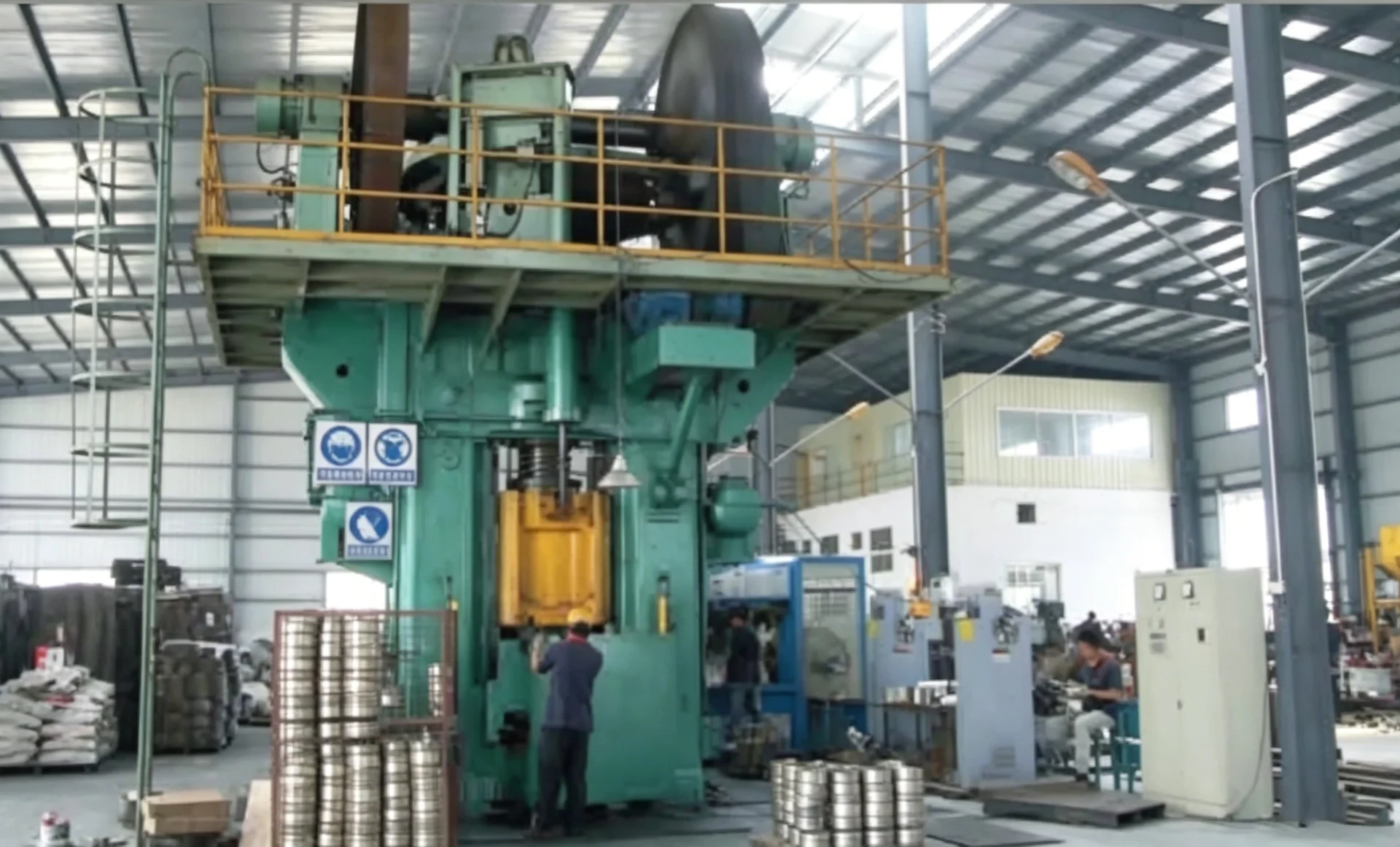
The significance here is straightforward: a factory that can produce across all five constructions has no incentive to push buyers toward a suboptimal option. The recommendation you get from JC Cookware’s technical team reflects your market requirements — not production convenience.
Certifications: The Full Stack
JC Cookware holds the certifications that create friction when they’re missing and open doors when they’re in place:
| Certification | Why It Matters |
| ISO 9001:2015 | Documented quality management — the baseline that serious retail buyers require before an audit |
| BSCI | Social compliance standard — required by most major European and North American retail chains |
| CE Marking | EU market access; necessary for any European distribution |
| LFGB | German food-contact standard — stricter than FDA, effectively required for pan-European shelf placement |
| FDA Compliance | US food-contact requirements, backed by lab test reports from accredited third-party labs |
The in-house quality lab runs XRF spectrometer testing on incoming steel batches — the same instrument a third-party inspector would bring to a factory audit. Buyers receive batch-level material test reports with every order, which eliminates the guesswork that causes most quality disputes before they start.
OEM and ODM: How the Transition Actually Works
JC Cookware supports both OEM (buyer-owned design, factory produces to spec) and ODM (factory-designed products branded by the buyer). What distinguishes their approach is how they handle the transition between the two.
New buyers typically start with ODM — lower MOQs (500–1,000 units per SKU), faster time to market (4–6 weeks vs. 10–12 for custom tooling). Once a SKU proves out in the market, JC Cookware’s in-house R&D team — handling CAD development, mold fabrication, and pre-production sampling — can convert that ODM product into a fully proprietary OEM design. Tooling costs run $3,000–$8,000 per custom mold; OEM MOQs start at 1,000–3,000 units per SKU.
The R&D team is worth mentioning specifically: they work on design optimization before prototyping, which means fewer revision cycles and lower tooling waste. For buyers entering a new product category, that upstream involvement is the difference between a six-week sampling process and a three-month one.
The Specialty Lines Other Factories Don’t Talk About
Two product categories at JC Cookware are worth highlighting for buyers looking to differentiate their offering:
Nesting/Matryoshka Cookware Sets (Model JC-9010A): Six-piece sets with foldable side handles and collapsible lid knobs, allowing each pot to nest inside the next larger one. The packaging footprint shrinks by 40–60% versus conventional sets — a genuine cost advantage across ocean freight, domestic distribution, and last-mile delivery. For end consumers, the value is equally direct: a full set that fits in a fraction of the usual storage space, designed for urban kitchens where cabinet space is limited.
Colorful Painted Exteriors (Models JC-8110B, JC-8210A): High-temperature exterior coatings (cured at 230°C+) in cobalt blue, matte black, gold, copper, and burgundy, with Pantone-matching for OEM programs. Beyond visual appeal, the coating serves a practical function: it resists surface oxidation, protects the pot body from everyday wear, and cleans up with minimal effort — a wipe is enough. For buyers sourcing into Gulf markets, where cookware is frequently displayed openly rather than stored in cabinets, both the color options and the easy-maintenance surface are genuine purchase drivers.
Both categories have minimal online presence in the B2B sourcing space — buyers entering early have a clear content visibility advantage.
Key Figures at a Glance
| Metric | Figure |
| Founded | 2003 |
| Facility Size | 40,000 m² |
| Annual Output | 3,000,000+ pieces |
| Cumulative Export Volume | 50,000,000+ units |
| Active Export Markets | 30+ countries |
| ODM Minimum Order | 500–1,000 units/SKU |
| OEM Minimum Order | 1,000–3,000 units/SKU |
| Standard Lead Time | 30–45 days from order confirmation |
More information and product specifications are available at jincui.com.
Understanding Stainless Steel Grades: What B2B Buyers Must Know
Not all stainless steel is created equal, and the difference between grades isn’t cosmetic — it’s the difference between a product that lasts decades and one that rusts in a dishwasher.
304 vs. 316 vs. 201: The Grade That Matters
| Grade | Chromium | Nickel | Molybdenum | Corrosion Resistance | Typical Use | Relative Cost |
| 304 | 18–20% | 8–10.5% | — | High | Food-contact cookware (standard) | Baseline |
| 316 | 16–18% | 10–14% | 2–3% | Very High | Marine/coastal, premium lines | +20–30% |
| 201 | 16–18% | 3.5–5.5% | — | Low | Decorative only, NOT food-contact | −30–40% |
304 stainless steel (also called 18/8) is the industry standard for food-contact cookware. The 18% chromium forms the passive oxide layer that prevents rust; the 8% nickel provides corrosion resistance and the characteristic polished shine.
316 stainless steel adds 2–3% molybdenum, which dramatically improves resistance to chloride corrosion — think coastal markets, dishwasher detergent exposure, or highly acidic cooking. If you’re selling into premium lines or marine-adjacent markets (Middle East, Caribbean resorts), 316 is worth the premium.
201 stainless steel is where the trouble starts. It replaces nickel with manganese to cut costs, resulting in significantly lower corrosion resistance. It rusts. It pits. And unscrupulous suppliers routinely pass it off as 304 because — to the naked eye — they look identical.
18/8 vs. 18/10: What’s the Real Difference?
You’ll see both numbers marketed on cookware. Here’s the truth: 18/8 = 18% chromium, 8% nickel (standard 304). 18/10 = 18% chromium, 10% nickel — still 304, just at the upper end of the spec range. They are the same grade of steel. The 18/10 label is primarily a marketing distinction. Don’t let a supplier charge more for “18/10” — it’s the same material.
How to Verify Steel Authenticity
Three reliable methods, ranked by accuracy:
- 1. XRF Spectrometer Testing — A handheld X-ray fluorescence device reads elemental composition in under 30 seconds. If a factory doesn’t have one or won’t let you use one on-site, that’s a red flag.
- 1. Third-Party Lab Test Reports — Request mill test certificates (MTCs) from the steel supplier, then verify them with an independent lab (SGS, Intertek). Cost: $50–150 per sample.
- 1. Chemical Reagent Test — A quick field test using a molybdenum detection reagent. Won’t give exact percentages, but can distinguish 304 from 201 in seconds. Cost: under $5 per test.
At JC Cookware: We run XRF spectrometer testing on every incoming steel batch and maintain full material traceability from mill certificate to finished product. Our clients receive batch-level test reports with every order.
Base Construction: Three Technologies Compared
How the base goes on — that’s what decides whether your pan heats evenly or develops hot spots. It also determines your price point and target market fit.
Whole-Clad (Tri-Ply / Multi-Ply Clad)
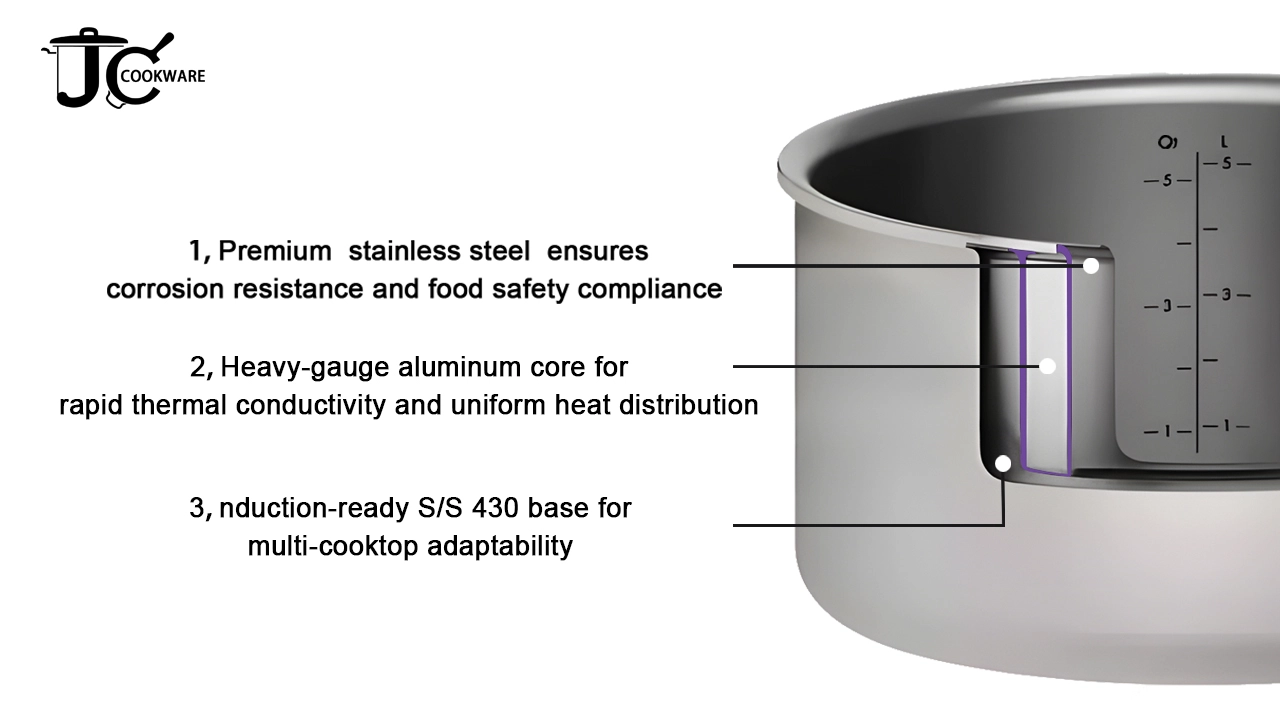
Three layers bonded into a single seamless piece that extends from base to sidewalls:
- Interior layer: 304 stainless steel (food-safe, non-reactive)
- Core layer: Aluminum (rapid, even heat distribution)
- Exterior layer: 430 magnetic stainless steel (induction compatible)
The aluminum core extends up the walls, eliminating the hot spots that cause burning and scorching. Tri-ply cookware reduces hot spots by up to 60% compared to single-ply. Trade-off: higher material cost positions whole-clad as a mid-to-premium product line.
Representative model: JC-8020A— a 3-ply whole-clad saucepan with polished interior.
Impact Bonding (Encapsulated Base)
High-pressure friction fuses an aluminum disc to the bottom of a single-ply stainless steel body. The result: a thick, flat, aluminum-core bottom wrapped in thin stainless steel skin.
Key advantage: Excellent heat distribution at significantly lower cost than whole-clad. Impact-bonded bases withstand 1,000+ thermal shock cycles, making them the preferred choice for stainless steel cookware wholesale buyers targeting mid-market price points.
Trade-off: Sidewalls are single-ply, meaning less even heating up the sides. Fine for most tasks; whole-clad performs better for delicate sauces.
Representative model: JC-8410A — an impact-bonded stockpot with a heavy encapsulated base.
Brazing Base
An aluminum disc joined to the base using a copper-based brazing alloy and controlled heat. The oldest method — still widely used for budget-conscious product lines.
Key advantage: Lowest production cost. Reliable for standard home cooking temperatures.
Trade-off: Weakest bond under extreme conditions. Repeated high-heat or thermal shock can cause delamination. Not recommended for commercial lines.
Representative model: JC-8080A — a brazed-base frying pan for the value segment.
Side-by-Side Comparison
| Feature | Whole-Clad (Tri-Ply) | Impact Bonding | Brazing Base |
| Heat Distribution | Excellent (base + walls) | Very Good (base only) | Good (base only) |
| Induction Compatible | Yes | Yes | Yes |
| Thermal Shock Resistance | Excellent | Excellent (1,000+ cycles) | Moderate |
| Delamination Risk | None (seamless) | Very Low | Moderate |
| Cost Tier | Premium | Mid-Range | Budget |
| Best For | Premium retail, professional | Commercial, mid-market | Value retail, entry-level |
| Typical MOQ | Higher | Moderate | Lower |
Match the technology to your market. Don’t sell brazed-base pans as premium, and don’t over-invest in whole-clad for a value channel.
Specialty Product Lines: Standing Out on the Shelf
The differentiation opportunity isn’t in yet another stainless steel frying pan. It’s in product lines that solve real consumer problems and give buyers a genuine reason to choose you over the next listing.
Nesting / Matryoshka Cookware Sets
Nesting cookware is designed for the consumer’s real kitchen life: foldable side handles and a collapsible lid knob allow each pot to stack inside the next larger one. A six-piece set compresses into roughly the space of a single stockpot.
Why it matters for B2B buyers:
- Shipping efficiency: Nested sets reduce package volume by 40–60%, cutting freight costs per unit — container utilization improves significantly compared to conventional sets
- Lower logistics spend across the supply chain: Savings apply not just to ocean freight, but to domestic distribution and last-mile delivery as well
- Urban market fit: Consumers in small European and Asian apartments treat storage space as a premium. A cookware set that takes up a fraction of the usual cabinet space is a practical answer to a real constraint, not a gimmick
Representative model: JC-9010A — a 6-piece nesting set with detachable handles and universal lids. Zero competing content exists online for this category in the B2B sourcing space — first-mover advantage on search rankings.
Colorful Painted Exterior
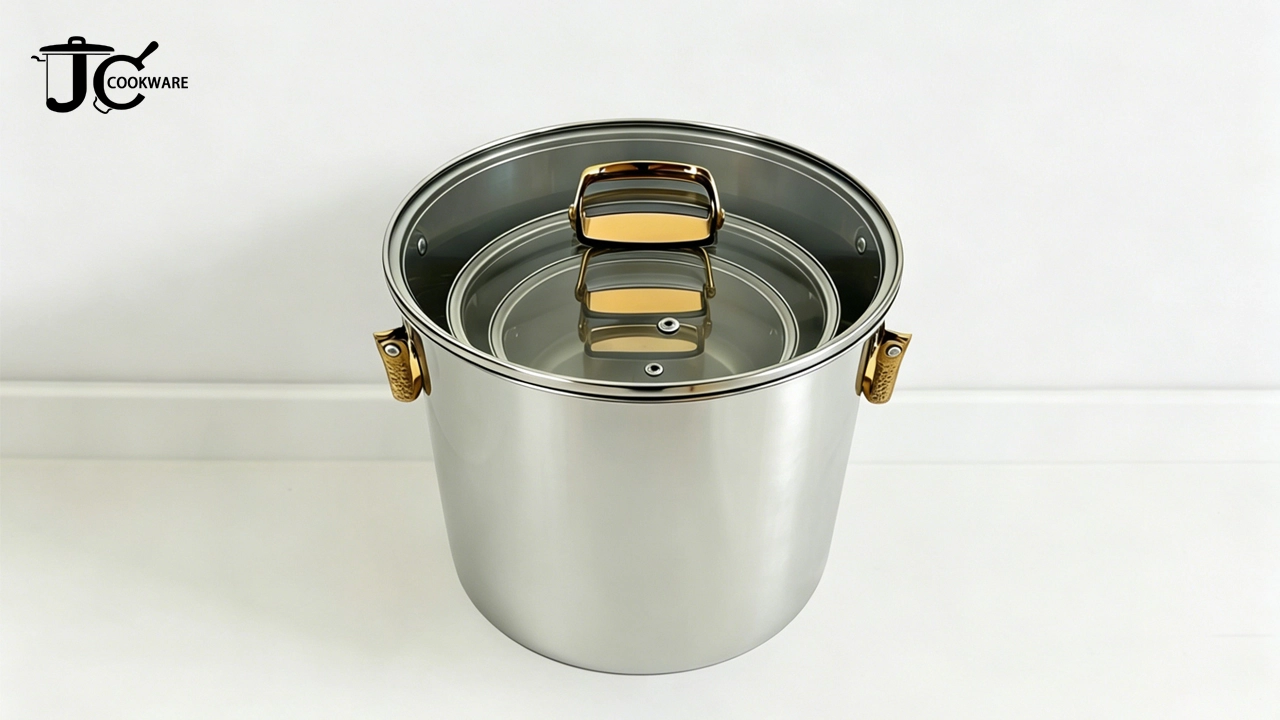
High-temperature paint (cured at 230°C+) applied to the outer surface. The result isn’t just visual — the coating adds a functional layer of protection.
Why it matters:
- More color options for end consumers: Cobalt blue, matte black, gold, copper, burgundy — buyers can offer a range of aesthetics rather than defaulting to bare stainless. Colors can be matched to brand palettes (Pantone matching) for OEM programs
- Protective and low-maintenance: The exterior coating resists rust and surface oxidation, keeping the pan looking cleaner for longer. Residue wipes off easily — a single cloth is enough for daily upkeep
- Middle East demand: Bold colors (gold, copper, deep red) are strong performers in Gulf markets where cookware is stored openly. The coating keeps the surface pristine even when displayed rather than stored in a cabinet
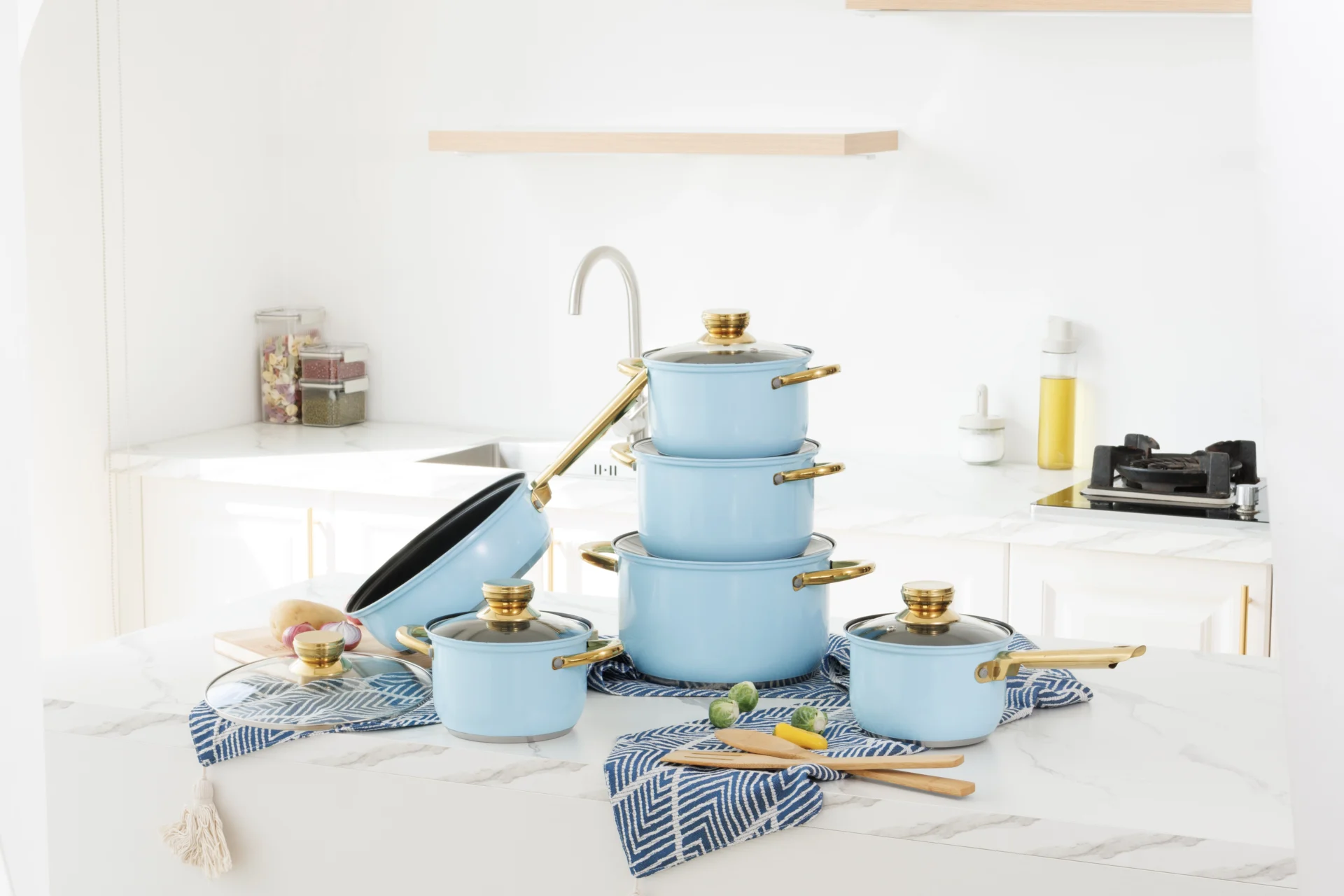
Representative models: JC-8110B and JC-8210A — colorful painted saucepans and stockpots with heat-resistant exterior finishes.
OEM vs ODM: Choosing the Right Partnership Model
OEM or ODM? You’ll face this question on your first call with any custom stainless steel cookware manufacturer — and the answer changes everything about your business model.
What OEM Means
You bring the design, and the factory builds it to your specifications. You own the design, the molds, and the brand.
When OEM is right: You have an established brand with specific design requirements, want to own the molds, and have in-house design capabilities. OEM typically requires higher MOQs (1,000–3,000 units per SKU) and upfront tooling costs ($3,000–$8,000 per custom mold).
What ODM Offers
The factory provides existing designs that you brand with your logo and packaging. You’re selecting from a catalog rather than designing from scratch.
When ODM is right: You’re entering the market quickly, want lower MOQs (500–1,000 units), and are testing demand before committing to custom designs. ODM products are available to other buyers, but strategic customization (exclusive colors, proprietary handle designs) can differentiate significantly.
Decision Framework
| Factor | Choose OEM When… | Choose ODM When… |
| Speed to market | You can wait 10–12 weeks | You need product in 4–6 weeks |
| Budget | You have tooling budget ($5K–$15K) | You want to minimize upfront investment |
| Exclusivity | You need unique products | Standard designs with your brand work fine |
| MOQ tolerance | 2,000+ units per SKU | 500–1,000 units per SKU |
Many successful brands start with ODM to validate demand, then transition to OEM for best-selling SKUs. A good manufacturer supports both paths — and helps you make the transition smoothly.
How to Evaluate a Supplier: Factory Scorecard
Take this scorecard to your first factory call — before you place an order.
Factory Verification Checklist
- Business licenseBusiness license — Registered manufacturing entity, not a trading company?
- Factory ownership or leaseFactory ownership or lease — Can they prove they operate the facility they claim?
- Production capacityProduction capacity — Monthly output volume and current utilization rate
- In-house capabilitiesIn-house capabilities — Do they handle drawing, bonding, polishing, and assembly, or outsource key steps?
- Quality management systemQuality management system — ISO 9001 certification or equivalent documented QMS
- Testing equipmentTesting equipment — XRF spectrometer, thermal distribution tester, salt spray tester
- R&D capabilityR&D capability — Dedicated engineering team for product development
10 Must-Ask Questions
Before you sign anything:
- What steel grades do you stock, and can I see your incoming material test reports?
- Which base construction technologies do you manufacture in-house?
- What is your MOQ per SKU for standard products vs. custom OEM designs?
- Can I visit the production floor during my order’s manufacturing run?
- What third-party inspections do you perform, and can I appoint my own inspector?
Before your first production run:
- 1. Which certifications do you currently hold (CE, LFGB, FDA, ISO)?
- 2. What is your defect rate for the past 12 months?
- 3. Can you provide references from buyers in my target market?
- 4. What is your standard lead time from order confirmation to FOB shipment?
- 5. How do you handle quality disputes — what is your claims process?
Evasive or vague responses to any of these are a warning sign.
Essential Certifications by Market
| Market | Required Certifications | Important Notes |
| European Union | CE marking, LFGB (food contact) | LFGB is stricter than FDA; required for Germany |
| United States | FDA food contact compliance | Test reports essential for liability |
| Middle East (GCC) | CE (widely accepted), SASO (Saudi), ESMA (UAE) | Halal compliance increasingly relevant |
| Global | ISO 9001 (quality management) | Demonstrates systematic quality control |
Sample Evaluation Protocol
- Initial sampleInitial sample — Evaluate design, finish, and basic functionality. Check for visible defects, uneven polishing, handle looseness
- Pre-production samplePre-production sample — Produced on the actual mass-production line using the same materials and processes. This is your “golden sample” — the reference standard for the entire order
- Small-batch trialSmall-batch trial (20–30% of order) — Ship a partial order first. Inspect thoroughly. Only release the remaining 70–80% after approval. Yes, this adds a week or two. It also saves you from discovering a problem after 10,000 units are already on the water
Common Sourcing Pitfalls — and How to Avoid Them
In 2023, a mid-sized European housewares brand sourced what they thought was 304 stainless steel cookware from a new stainless steel cookware supplier. The price was 25% below market average. Samples looked perfect. Six months after retail launch, customer complaints flooded in: rust spots, pitting, handles detaching.
Lab testing revealed the production run had used 201 stainless steel instead of the specified 304. The supplier had provided genuine 304 samples — then swapped the material for bulk production. The brand lost two months of sales, spent €40,000 on recalls, and burned through a retail partnership built over three years.
Pitfall 1: 201 Steel Passed Off as 304
The most common and most damaging fraud in stainless steel cookware China sourcing. 201 steel costs 30–40% less than 304 and looks identical to the untrained eye.
How to avoid it: Demand XRF testing on production-floor material. Include steel grade verification in your purchase contract with penalty clauses. Hire a third-party inspector to test random pieces during production. If the price is significantly below market average for 304, assume it’s 201 until proven otherwise.
Pitfall 2: Trading Companies Posing as Factories
A staggering number of “manufacturers” on B2B platforms are actually trading companies — middlemen who mark up factory prices by 15–30% while providing zero production control.
How to avoid it: Request a factory visit (trading companies will deflect). Check the business license — it should list manufacturing as the registered scope. Ask to see the production floor on a video call — a real factory can do this immediately.
Pitfall 3: Sample Quality ≠ Production Quality
Some factories put extraordinary care into samples, then switch to standard processes for mass production.
How to avoid it: Always request pre-production samples made on the actual production line. Use the small-batch trial protocol. Include a “golden sample” clause in your contract: all production must match the approved sample within defined tolerances. Hire an independent QC inspector to check during production, not just before shipping.
Pitfall 4: Ignoring MOQ Until It’s Too Late
Many buyers spend weeks negotiating, only to discover the MOQ is 5,000 units per SKU — five times what they need.
How to avoid it: Ask about MOQ in your very first communication. Negotiate MOQ separately from price; some factories offer lower MOQs at slightly higher unit prices. Look for ODM programs, which typically have lower MOQs. Consider a trial order: some factories will accept 500–1,000 unit trial runs for new partnerships.
Market-Specific Considerations
North America & Europe
United States: FDA food contact compliance required (no formal certification — test reports from SGS/Intertek essential). Induction compatibility increasingly expected. Large-format retail demands aggressive pricing; premium DTC brands favor whole-clad.
European Union: CE marking mandatory. LFGB compliance (German food safety standard) is effectively required for pan-European distribution. Sustainability storytelling (recycled steel, recyclable packaging) is a competitive advantage. EU PFAS regulations are accelerating the shift from non-stick to stainless steel.
Middle East
Ahmed Al-Rashid, a procurement manager for a Gulf-region housewares distributor, learned this firsthand. After importing standard European-style cookware with disappointing sell-through rates, he requested three modifications: larger pot capacities, heavier-gauge bases (for sustained high-heat cooking like machboos and kabsa), and bold exterior colors (gold, copper, deep burgundy — cookware in Gulf homes is displayed, not hidden). Sales doubled within one quarter.
Key Middle East considerationsKey Middle East considerations:
- Size: Stock pots of 8–12Qt and large sauté pans (30cm+) are the real movers
- Heat intensity: Impact-bonded or whole-clad constructions are essential — brazing-base not recommended
- Color preference: Bold, warm tones (gold, copper, burgundy) outperform silver/stainless
- Halal compliance: Increasingly relevant for food-contact products. Having it (or being prepared to obtain it) removes friction with government procurement and large retail chains
- GCC certifications: SASO (Saudi Arabia), ESMA (UAE), and general GCC conformity assessment
- Ramadan timing: Cookware demand spikes before Ramadan — plan production accordingly
Frequently Asked Questions
What is the best stainless steel grade for cookware?
304 (18/8) is the minimum standard for food-contact cookware. 316 adds molybdenum for coastal and premium markets, while 201 is unsuitable for food contact.
How do I verify a manufacturer's steel quality?
Use XRF spectrometer testing on the production floor, request third-party lab test reports from SGS or Intertek, and use chemical reagent tests to distinguish 304 from 201.
What certifications does stainless steel cookware need?
For the EU, check CE marking and LFGB compliance. For the US, request FDA food-contact compliance with test reports. For Middle East markets, check SASO, ESMA and CE acceptance. ISO 9001 is recommended globally.
Conclusion: Your Next Step
What actually determines whether a stainless steel cookware manufacturer is worth your time is whether they can deliver consistent quality six orders from now, adapt when your market shifts, and scale when your bestseller takes off.
- Steel gradesSteel grades — verify or regret it. 304 is the minimum. Test with XRF
- Base constructionBase construction — match it to your market. Whole-clad for premium, impact-bonded for mid-market, brazed for value
- Specialty linesSpecialty lines — nesting sets cut freight and storage costs; colorful painted exteriors expand consumer choice and add genuine protection. Neither category has much competitive content online yet
- The scorecardThe scorecard — factory verification, 10 must-ask questions, and the sample protocol eliminate 90% of sourcing risk
- Market fitMarket fit — Munich ≠ Dubai. Size, color, and certification requirements vary dramatically
Start a conversation with a manufacturer who can answer all ten questions clearly. If you’re looking for a partner with CE, LFGB, and FDA certifications, five base construction technologies under one roof, and a track record of 5 million+ units shipped to 30+ countries — JC Cookware is ready to talk.
Visit us at (https://jincui.com/) to start a conversation.
Find the right manufacturer, and every container that lands at your warehouse makes you look smarter. Find the wrong one, and you’ll be explaining rust spots to your retail partner for the next six months.